
1. “How much should I save each month?”
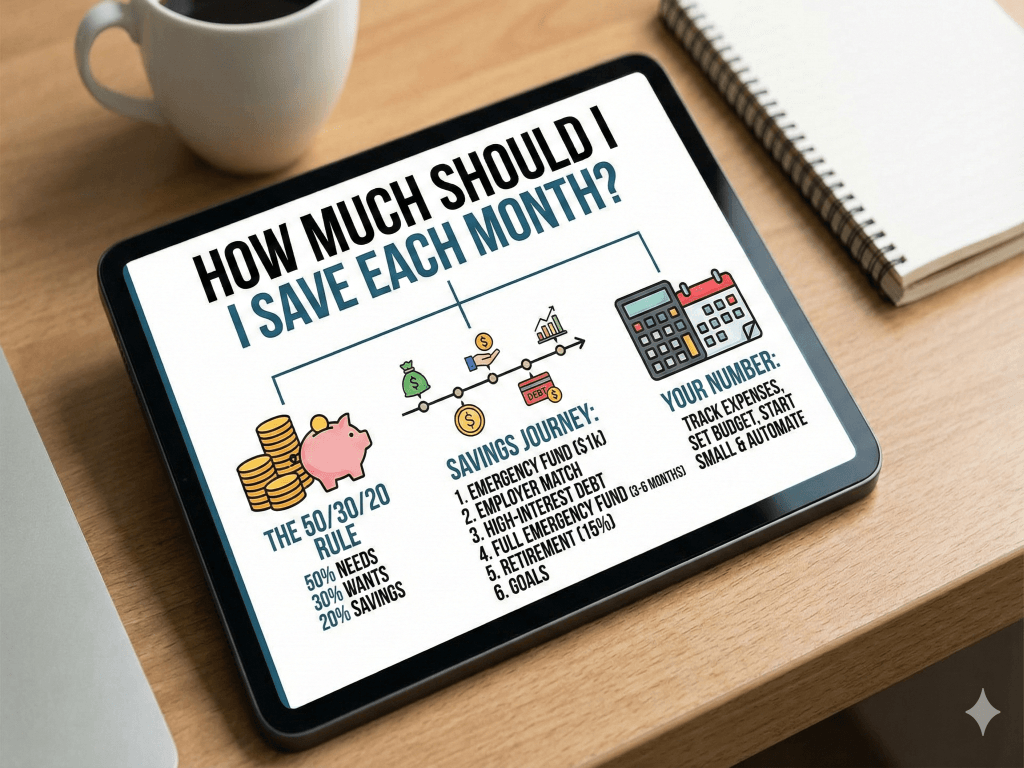
There’s no magic number, but the most effective starting point is the 50/30/20 rule:
- 50% needs
- 30% wants
- 20% savings/debt payoff
If 20% feels too high, simply begin with €50–€100 monthly and automate it. Slowly increase it each time your income rises. Consistency builds wealth far more than perfection.
2. “Do I need an emergency fund?”
Yes — it’s your financial safety net. Aim for 3–6 months of essential expenses.
Start small: even €500–€1,000 creates breathing room. Store it in a high-yield savings account, not in investments where the value might drop.
3. “Should I pay off debt first or invest first?”
If the interest rate on your debt is above 7%, pay it off first — guaranteed returns beat market uncertainty.
If it’s lower, you can safely split: for example, 70% toward debt, 30% toward investing, so you keep building wealth while reducing liabilities.
4. “How do I start investing if I’m a beginner?”
Keep it simple:
- Open a brokerage account.
- Start with broad index funds or ETFs (example: S&P 500 ETF + global diversification).
- Invest a fixed amount every month.
Avoid stock-picking early on. Time in the market beats timing the market.
5. “How can I improve my credit score?”
Three habits make the biggest difference:
- Pay every bill on time.
- Keep credit utilization below 30%.
- Avoid opening too many accounts at once.
A bonus tip: request a credit limit increase every 6–12 months to automatically improve utilization.
6. “What’s the best way to budget without feeling restricted?”
Use a “pay yourself first” budget: automate savings and bill payments, then spend the rest guilt-free.
This approach works because it focuses on your priorities before lifestyle expenses — not after.
7. “How much should I have saved for retirement?”
A widely used guideline is the 25× rule:
Estimate your needed annual retirement income and multiply by 25.
Example: Want €30,000 per year in retirement?
You’ll need about €750,000 invested.
But even small, early contributions add up thanks to compound growth — start now, even with €20 per week.
8. “Is renting a waste of money?”
Not necessarily. Renting offers flexibility, lower upfront costs, and no maintenance expenses.
Buying makes sense when:
- You plan to stay 7+ years,
- Mortgage + taxes + maintenance are affordable,
- And you have a solid emergency fund.
It’s less about status — more about long-term financial fit.
9. “How can I increase my income without switching careers?”
Focus on skill stacking, not radical career changes.
Ways to boost income:
- Freelance your existing skills
- Ask for a raise with quantified results
- Build micro-skills (automation, data handling, AI tools)
- Monetize hobbies via digital products or services
Small skill upgrades often lead to the biggest income jumps.
10. “How do I prevent overspending?”
Overspending usually comes from frictionless spending.
Try these tactics:
- Set a 24-hour rule before buying non-essentials
- Delete saved cards from shopping apps
- Use a separate “fun money” account
- Track only your bad habits, not your whole budget
The goal isn’t to remove joy — it’s to make buying more intentional.