
Learn how to invest €100 in index funds, ETFs, and automated investing apps. Simple, low-risk approach for EU beginners.
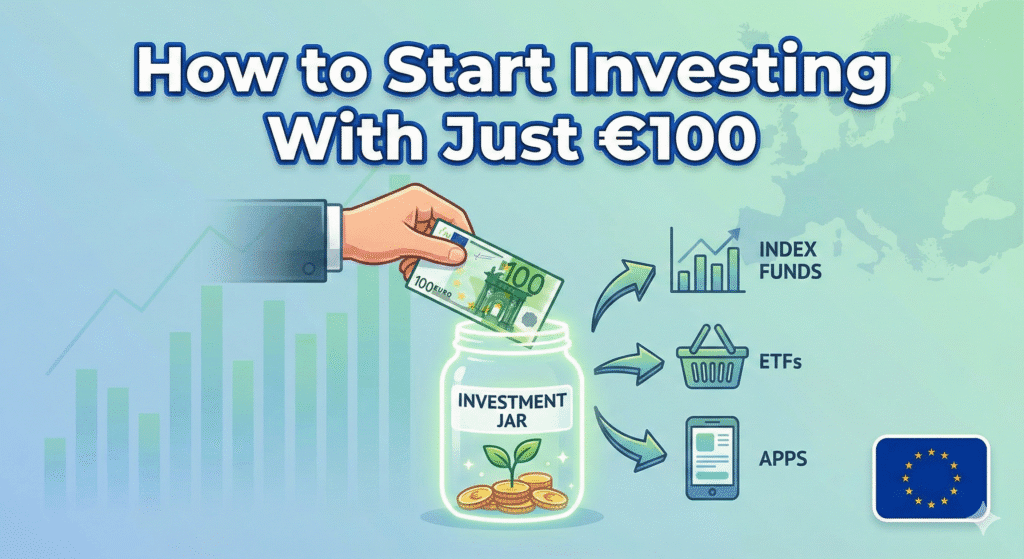
Introduction — Why €100 Is Enough
If you’re reading this, you might believe:
👉 “I don’t have much money — investing is only for rich people.”
This is a common misconception. Investing is not reserved for the wealthy. It is a tool for anyone who wants to become financially secure.
The wealthy don’t build fortunes because they gamble. Instead, they grow wealth because they understand compounding, discipline, and time. Your first €100 is not about becoming rich overnight. It is about building a habit and putting your money into assets that work while you sleep.
Small money invested consistently beats big money invested rarely.
Rule #1 — Don’t Chase Hype
We live in a digital era where social media rewards adrenaline and noise. Promises like “10x in one month” or “buy this coin now” attract attention but often harm beginners. Avoid meme coins, TikTok signals, overnight schemes, and day trading without knowledge.
The Smart First Step: Understand What You Own
Basic concepts matter: stocks = ownership in companies; ETFs = baskets of many stocks; indexes = groups of companies that represent a market. When your budget is small, ETFs reduce risk by owning many companies at once.
Option A — ETF Index Investing
An ETF (Exchange Traded Fund) lets you invest in a basket of companies with a single purchase. Beginner-friendly ETFs include MSCI World, S&P 500, and Euro Stoxx 50. These funds are diversified, low-fee, and time-tested.
Option B — Robo-Advisors (Automated Investing)
Robo-advisors automate portfolio construction and rebalancing. Choose a risk level (conservative, balanced, growth) and the app buys and manages diversified ETFs for you.
Why Small Money Matters
Many beginners postpone investing until they “have more money.” Investing is a discipline. Your first €100 helps you open an account, learn basics, and automate deposits — skills more valuable than the initial amount.
How to Invest €100 (Practical Breakdown)
- Choose a platform: regulated EU broker or robo-advisor, low fees, access to ETFs, fractional investing if possible.
- Deposit your €100: you are buying assets, not trading.
- Invest immediately: the best time to start was 10 years ago; the second-best time is now.
- Automate contributions: set €30–€50/month recurring purchases.
Your First 12 Months Roadmap
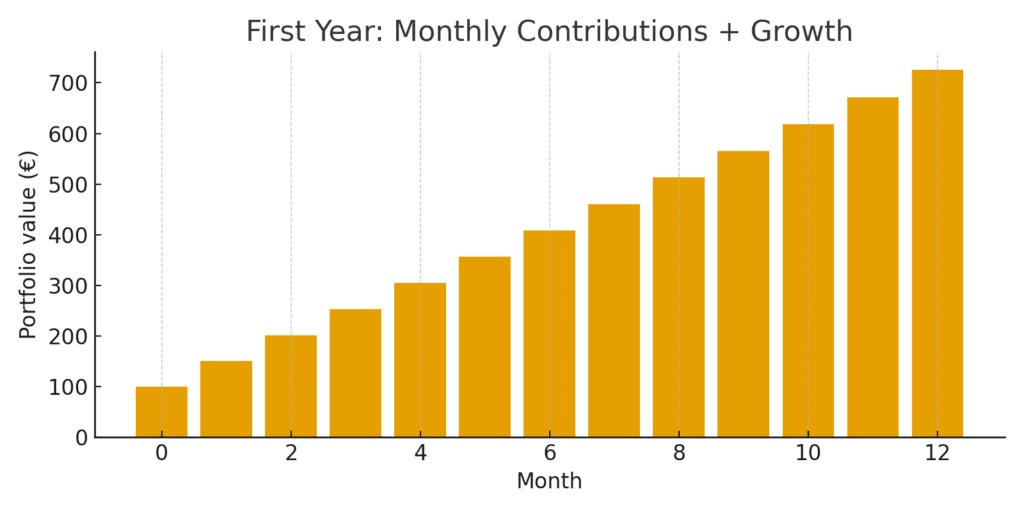
Month 1: Invest your first €100. Months 2–3: Add €30–€50/month. Months 4–12: Continue monthly contributions. You may end the year with €450–€700 invested.
What if the Market Crashes?
Crashes are normal. They are opportunities to buy on sale. Don’t panic sell; the market historically recovers and rewards long-term investors.
Why Index Funds Beat Savings Accounts
Savings accounts often lose to inflation. Diversified ETFs historically outperform inflation in the long run, protecting purchasing power.
The Magic Word: Compounding
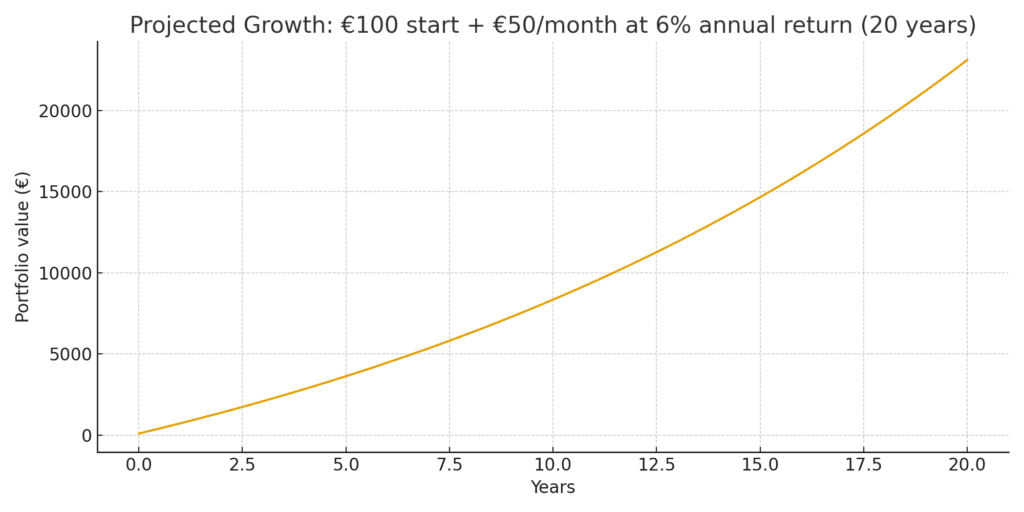
Compounding multiplies growth. For example, €50/month at 8% annually can grow to roughly €20k–€25k over 20 years.
Risk Disclosure (Real Talk)
You can lose money. Markets fluctuate. Investing is a long-term strategy, not a gamble. Over 10–15 years, diversified investing has historically beaten inflation and savings accounts.
Psychology: Your Biggest Enemy
Beginners often fail because of emotions: fear, greed, impulsiveness. Consistency beats trying to time the market.
What NOT to Do With Your First €100
Avoid crypto gambling, penny stocks, options trading, forex signals, “guaranteed returns,” influencer tips without research, and trading challenges.
How to Stay Motivated With Small Money
- Track growth monthly
- Focus on shares, not price
- Think in years, not days
- Visualize financial goals
Final Thought
Investing €100 changes your trajectory. You build discipline, long-term wealth, confidence, and ownership of assets. Start small and repeat.
Not financial advice. This post is for educational purposes only. Focus keyphrase: investing 100 euro